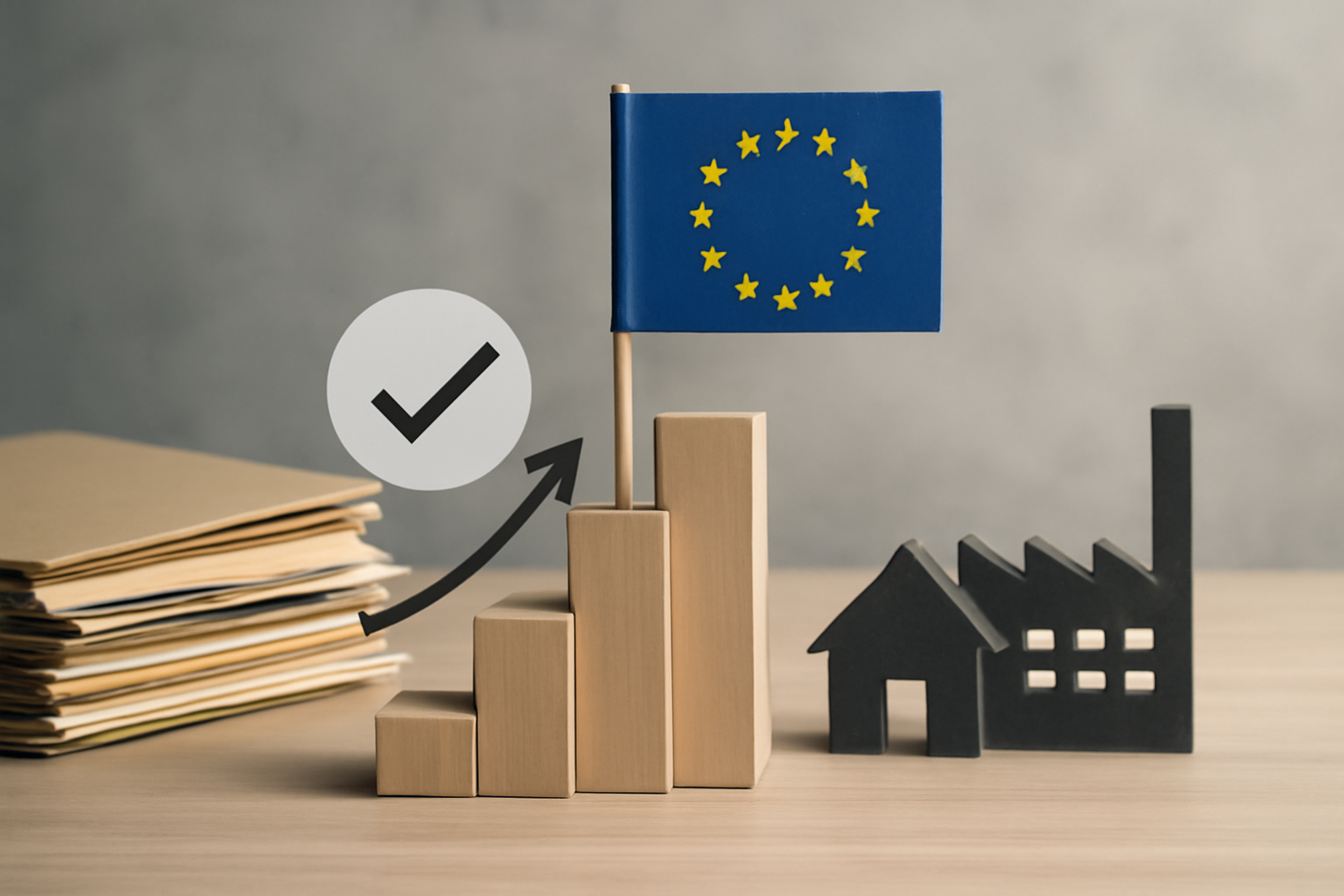
European reform: what administrative simplifications for start-ups and mid-sized enterprises?
In recent months, the European Union has made numerous announcements aimed at reducing administrative burdens on businesses, particularly start-ups, SMEs, and mid-sized enterprises (ETIs). The stated goal: to allow innovative structures to focus on their growth rather than on managing regulatory complexity. Starting in 2025, significant relaxations regarding GDPR, IPOs, and environmental reporting are announced.
For entrepreneurs and business leaders, these developments represent both opportunities and points of caution. Here’s an overview of the main measures announced and their legal, fiscal, and operational impact.
A New European Direction to Ease Business Obligations
On May 20, 2025, the European Commission confirmed the adoption of significant measures to simplify the regulatory environment for businesses and promote their development, particularly in innovative sectors. These measures come in an economic context marked by persistently weak growth, where the issue of European competitiveness remains central.
Among these announcements, two key areas stand out:
- The creation of a new category of intermediate enterprises benefiting from relaxations inspired by the regimes applicable to SMEs.
- An evolution in the application of GDPR to limit certain obligations deemed disproportionate in light of the real stakes of data protection.
For start-ups and scale-ups, this means: fewer formalities, more agility, and reduced compliance costs. However, it is essential to fully understand what these changes concretely entail.
GDPR: Relaxed Requirements for Structures with Fewer than 750 Employees
One of the major aspects of the reform concerns the General Data Protection Regulation (GDPR), which is often criticized for its complexity, especially by companies in the process of structuring.
From now on, companies with fewer than 750 employees will only be required to maintain a record of processing activities if they engage in personal data processing that presents a "high risk." In simple terms, not all companies will be obliged to systematically document all their processing activities.
Of course, this relaxation of rules should be interpreted with caution. For example, a HealthTech start-up using medical data remains heavily subject to GDPR obligations. Conversely, a SaaS company collecting only mundane commercial data could benefit from this new flexibility.
At PRAX Avocats, a recognized start-up lawyer, we recommend a case-by-case analysis to verify the qualification of "high-risk processing" as defined by regulatory authorities and to legally secure your compliance choices.
Stock Market Benefits and Partial Removal of Threshold Effects
Another major novelty: access to certain stock market simplification rules previously reserved for SMEs. ETIs, often straddling the line between innovative small businesses and structured groups, will now be able to benefit from accelerated IPO procedures.
In practical terms, this means:
- Fewer documentation obligations during the IPO process.
- Reduced ongoing financial information obligations.
- A reduction in certain regulatory timelines.
This flexibility could facilitate scale-ups' access to European financial markets while limiting the ceiling effect faced by many rapidly growing companies.
This represents a window of opportunity, but also a technical terrain. Legal implications, particularly in corporate law and stock market law, must be approached with caution and foresight. Specific legal advice for businesses is strongly recommended here.
Towards a More Digital and Less Burdensome Administration
Beyond GDPR and stock market rules, the European Union is announcing other sectoral measures:
- The gradual digitization of administrative formalities (report submissions, certifications, etc.).
- A relaxation of due diligence obligations for certain industrial sectors, particularly regarding batteries and fluorinated greenhouse gases.
These developments mark a clear intention to transition towards a more efficient digital administration. They could ultimately lead to estimated overall savings of 400 million euros per year at the European level, according to figures communicated by Brussels.
For start-up or ETI leaders, this translates into time savings, the ability to centralize key information, and better anticipation of regulatory constraints, with smoother compliance management.
What Strategies to Adopt Right Now?
While these reforms will be implemented gradually, it is not too early to anticipate their practical impact on your organization. Here are some suggestions:
- Identify current obligations that could be relaxed in the short term (notably GDPR, ESG reporting...).
- Map your main data processing activities to assess their risk level under GDPR.
- Review your financing plan in light of developments regarding possible IPOs.
- Adapt your legal processes to seize simplification opportunities as soon as they become effective.
At PRAX Avocats, we support innovative companies daily in their legal strategy, compliance, and fundraising efforts. Our approach is based on a deep understanding of business law and intellectual property, as well as a particular sensitivity to the operational challenges faced by start-ups.
Conclusion: Opportunities to Prepare Methodically
The announced reform opens concrete perspectives for start-ups, SMEs, and ETIs looking to reduce their administrative burdens without sacrificing legal rigor. To fully benefit from it, a personalized diagnosis is often necessary.
We also emphasize that any regulatory simplification does not exempt one from thorough legal monitoring. National authorities retain their control powers, particularly regarding personal data.
Take the initiative today. For personalized legal support for your business project, contact PRAX Avocats.